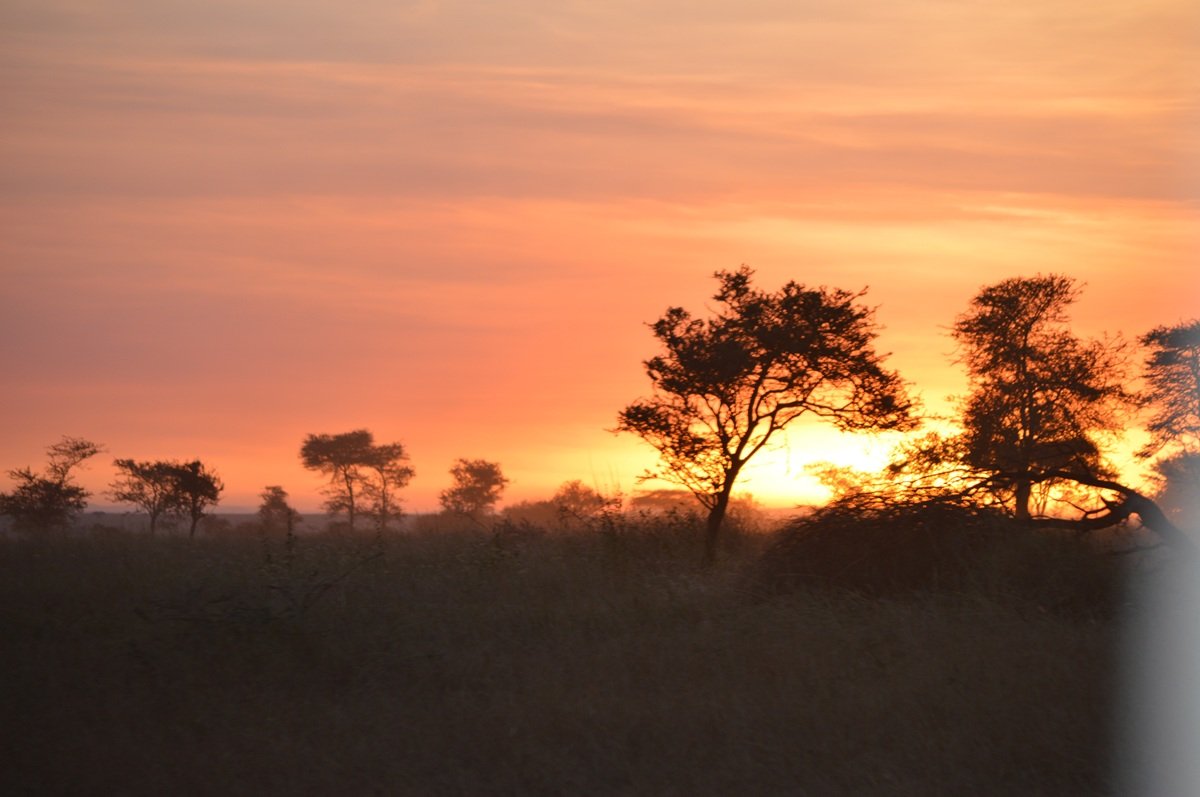
We had a truly memorable time on safari in Tanzania, but all too soon it was time to leave the mainland and head to Zanzibar for the remainder of our trip. We bid farewell to Lameck, hopped on a plane at Arusha Airport, and had touched down in Zanzibar in about an hour.
Zanzibar
Zanzibar. The very name has always conjured up images of the exotic for me. The scents and colors of spices. The sound of waves from the Indian Ocean. And now we were there.
As mentioned in previous posts, Zanzibar joined officially with Tanganyika in 1964, but let’s go back a bit further in time first. Zanzibar is not actually an island, as our guides were quick to point out. It’s an archipelago (a.k.a. the Spice Islands) along the Tanzania coast, consisting of three main islands and a number of smaller ones (some inhabited, others not). When people say they are visiting Zanzibar, they usually mean Unjuga Island which is the largest with about 900,000 people. The other two main islands are Pemba and Mafia. For the sake of ease, when I talk about our trip, we were on Unjuga Island, which is commonly referred to as Zanzibar Island. The islands cover a total area of about 600 square miles.
As on the mainland, Swahili is widely spoken, although the large Muslim population and the islands’ Arabian connections mean that it has a large Arabic influence (Kiswahili). You will also hear Arabic spoken in some places, as well as English and a range of south Asian languages.
Zanzibar’s location in the Indian Ocean means that historically it played an important role in regional trade routes, and it was under both Portuguese and Omani rule for long periods. In the 19th century, it broke away from Oman to become a sultanate in its own right, and later it became a British protectorate. All of these international influences still play a part in Zanzibar’s culture.
Arrival
After we arrived and grabbed our luggage, again appreciating the fact that we had opted to travel light with just a backpack each, we made our way our into the heat. The temperatures here were 5-10 degrees warmer than in the Serengeti, adding to the tropical feel. Our guide picked us up and we had a rather lengthy drive to the other side of the island. It took a while for a number of reasons, primarily the heavy traffic through Chukwan and Zanzibar City, and then the heavy construction elsewhere on the island. There is a lot of ongoing investment in the island infrastructure and so roads are being expanded and upgraded everywhere. I asked when it would be completed, and they shrugged. Perhaps weeks, perhaps months. Construction schedules, it seems, are the same wherever you go!
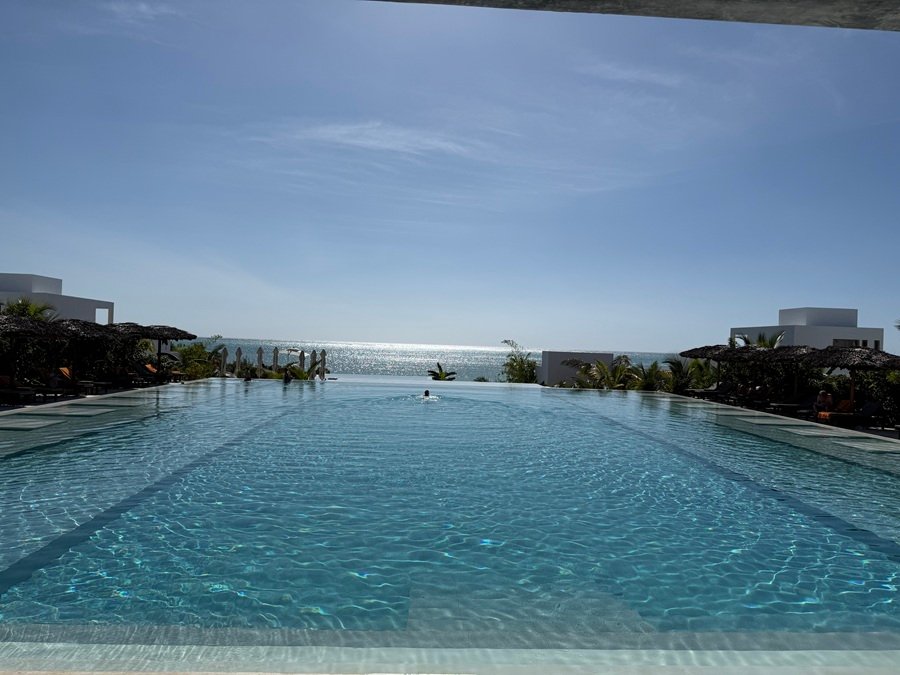
We stayed at the Legendary Zanzibar Beach Resort, located on the eastern side of the island. Our room opened onto a small private patio with access to a pool shared between about 10 rooms. There were also two main pools for everyone in the hotel – these were where most people seemed to hang out. The smaller pools provided a nice bit of additional privacy and ours was usually empty so a nice place to relax. From the main pools, a set of steps takes you down to the beach, although the immediate beach is rather rocky. Smoother sands are a little bit further along.
For dinner, I wanted to try a Zanzibar specialty and so opted for urojo, a bright yellow tangy soup which comes with a plateful of accompaniments – potatoes, chicken, egg, spices, and so on, allowing you to customize it to suit your own taste. It may seem strange to be eating soup in warm weather but if you get the chance to try urojo, I recommend it.
Exploring Stone Town
The next day, after a good night’s sleep and a hearty breakfast, our guide picked us up to take us to Stone Town, the older historic part of Zanzibar City. This time the drive took about two hours – lots of traffic once we hit the edge of the city – plenty of time for an African massage!
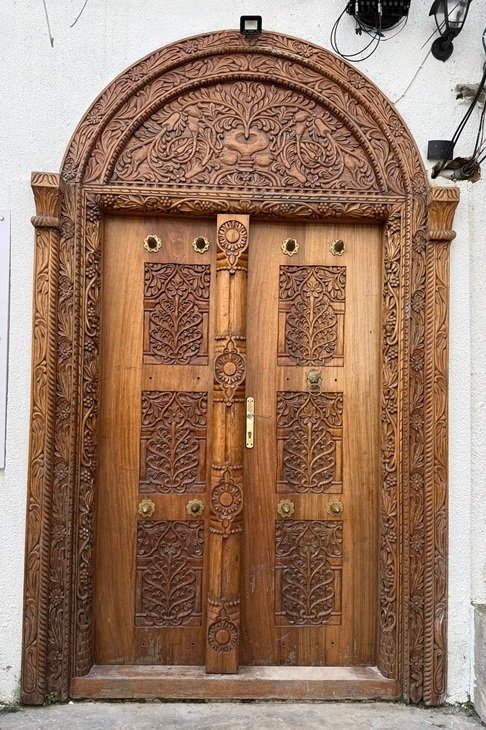
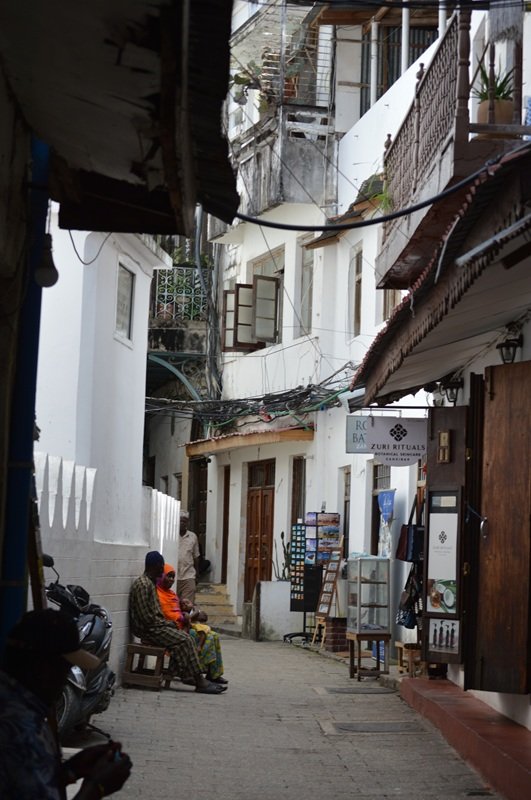
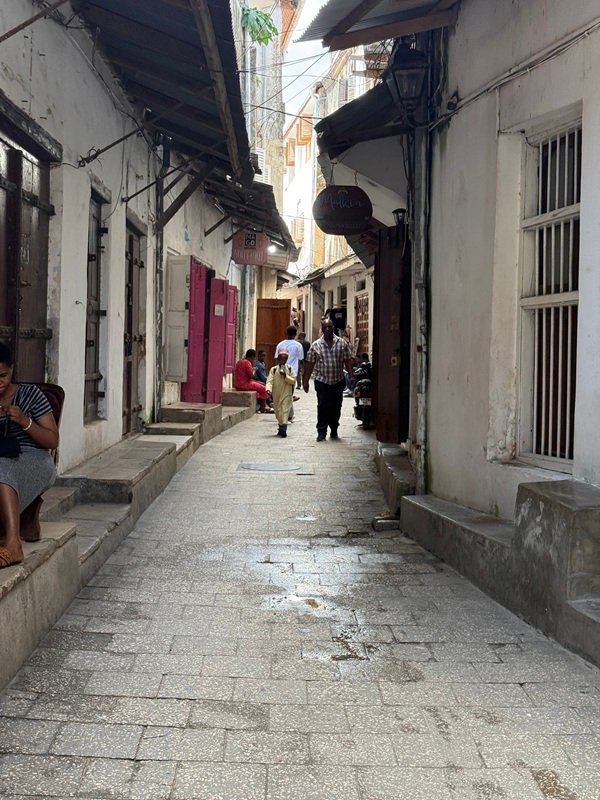
Stone Town is a UNESCO World Heritage Site and features some beautiful examples of Swahili, Asian, Portuguese, and Arabian-inspired architecture. I’m glad we had a guide as it would be easy to lose oneself in the labyrinth of winding streets.
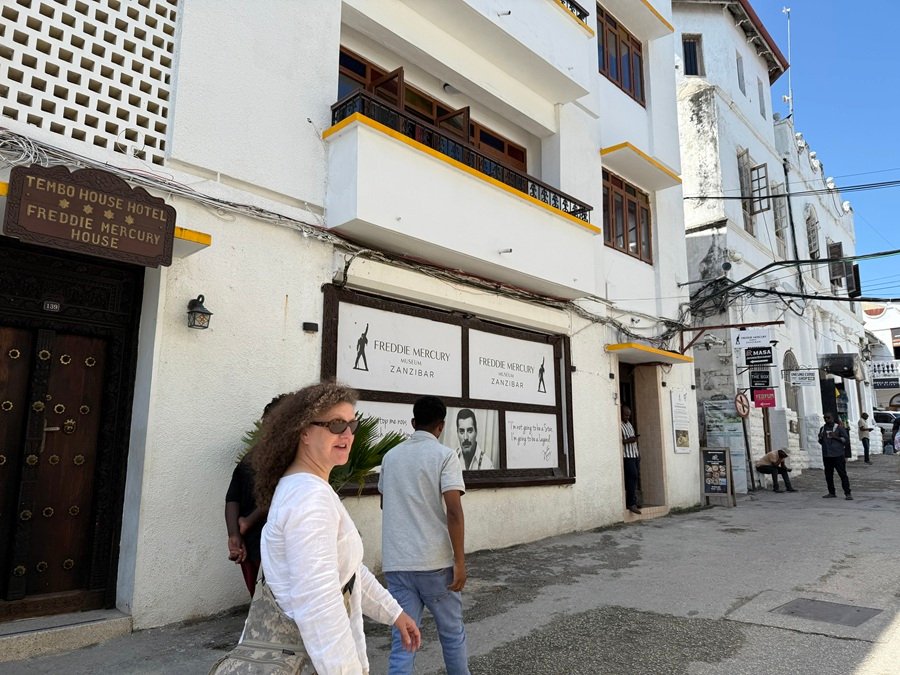
We started our tour at a spot with a dose of rock and roll, the museum celebrating Zanzibar’s most famous son. Farrokh Bulsara was born in Zanzibar in 1946, a member of the island’s small Zoroastrian community. He later went to school in India before moving with his family to the UK. You probably know him better as Freddie Mercury. The house where he was born is now a museum dedicated to him, and although the museum is quite small, it crams in a lot of history about his early life here and the broader history of Zanzibar. Visitors can browse through several galleries of photos, and then see samples of his lyric sheets, a piano, and some samples of his colorful stage costumes. Small, but a must-see when in Stone Town. Then back into the heat (and it was a hot day!) to see more of the district.
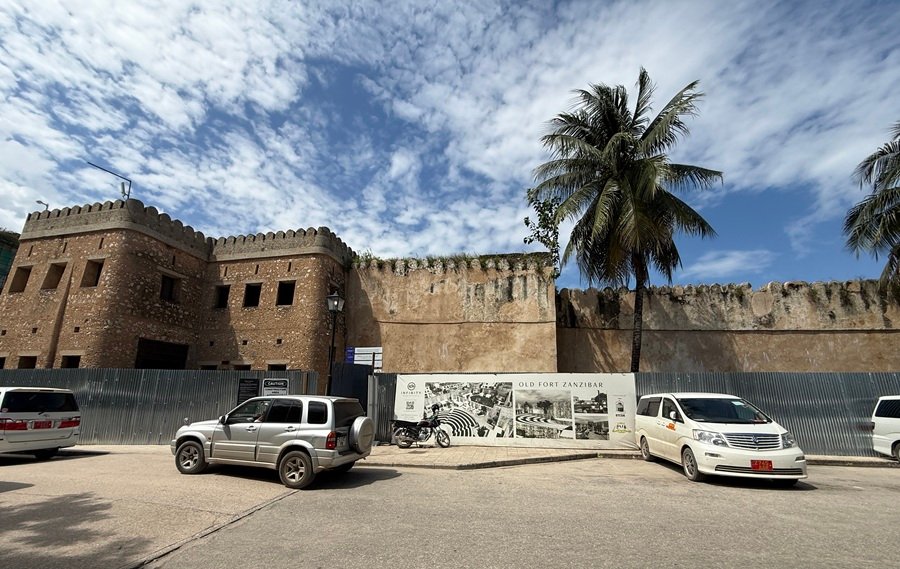
What was once a small fishing village and occasional trading post began to grow in the 16th and 17th centuries. First the Portuguese arrived, and saw its potential due to its strategic location. It was they who built some of the earliest fortifications and the harbor. Decades later, the Omanis snatched control and finished building the Old Fort. The Sultan moved his court there in 1840, and Zanzibar became a flourishing hub of trade for spices, ivory, and sadly, enslaved people. While we often think of slavery and West Africa, the East Coast also had a busy slave trade, trafficking captives to the Middle East. More about that below.
After leaving the museum, we made our way to the harbor, passing through Forodhani Gardens to the Old Fort and the House of Wonders, once the Sultan’s residence. Sadly, both buildings were closed for renovation so we could only view them from outside. Another tip: try to go to Forodhani Gardens in the evening. Our tour was earlier in the day but in the evening, the park fills with food vendors and entertainment.
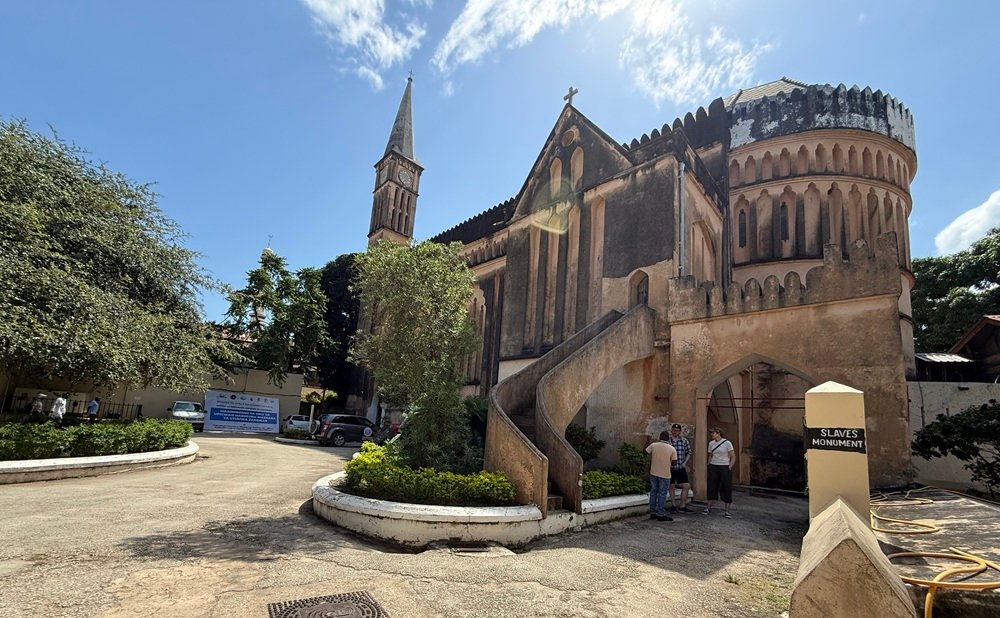
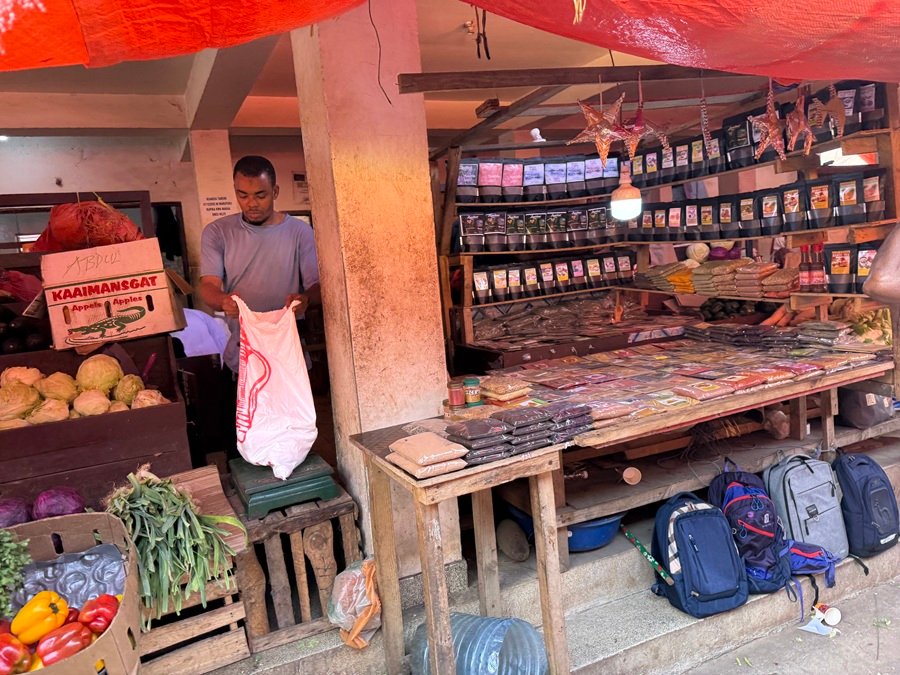
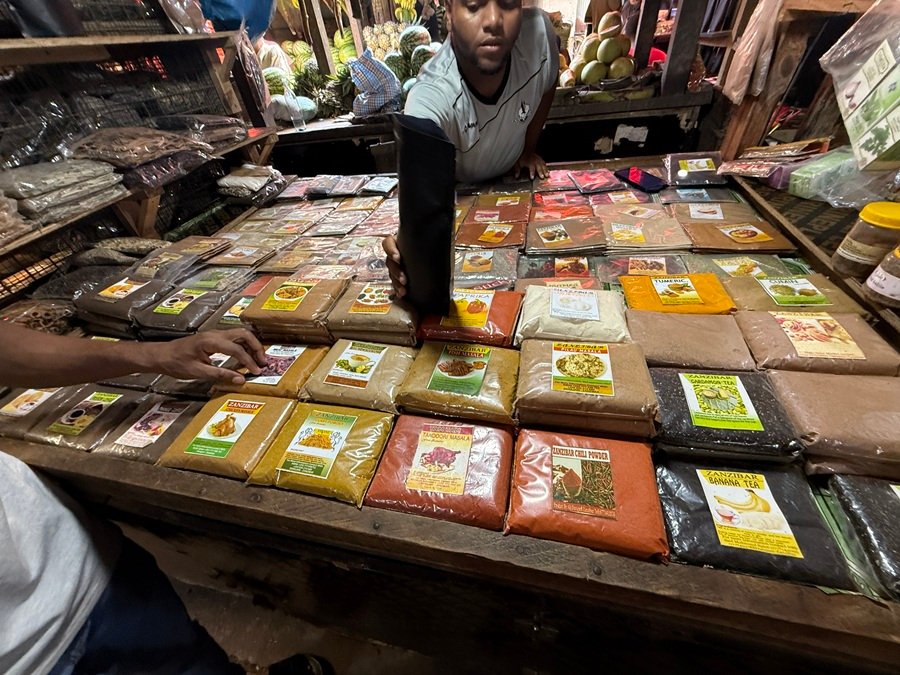
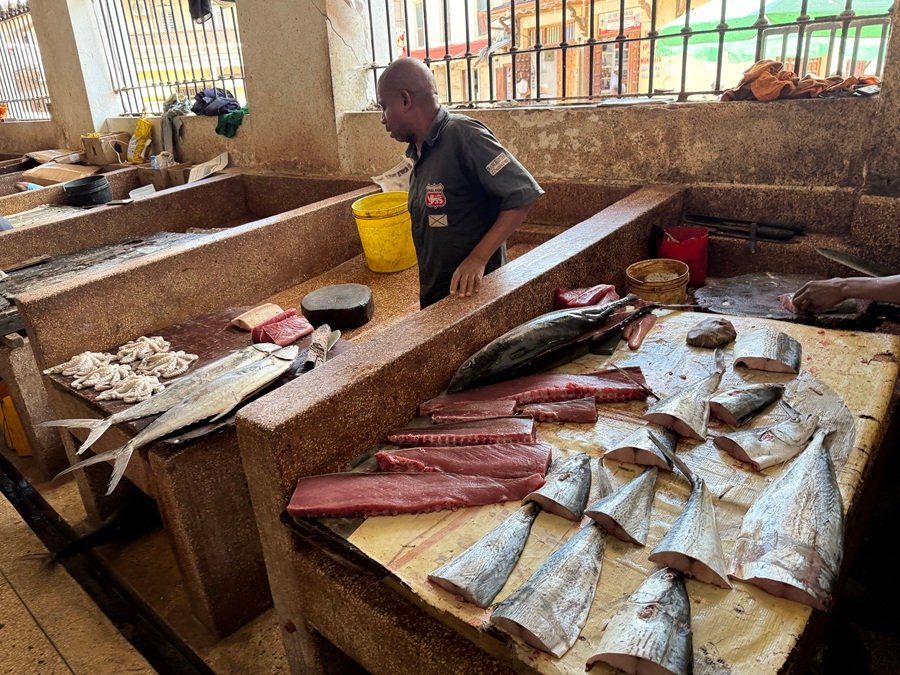
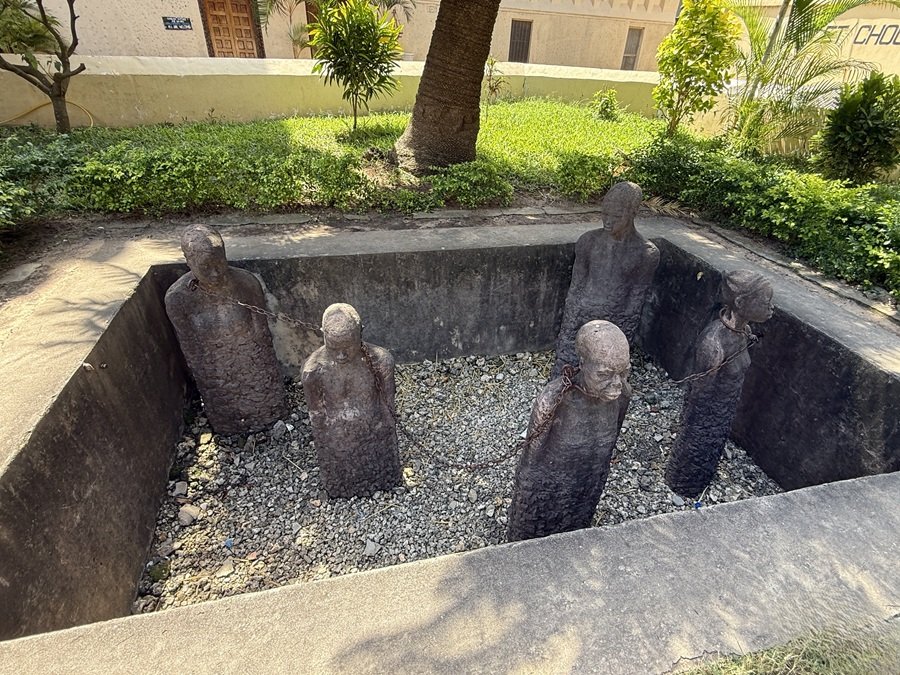
We couldn’t miss the spice markets, and so we made our way through the narrow streets and to a large covered market where you could buy just about any spice you could think of. I made a few purchases and then we wandered through the meat and fish markets, emerging the other side near the Anglican Cathedral of Christ Church. The cathedral was built in the late 19th century on the site of Stone Town’s largest slave market, a symbolic move to mark the abolition of the slave trade. It’s a beautiful church and services are still held, but another reason to visit is the slave monument in the grounds and the museum devoted to telling the history of slavery in this part of Africa. The museum contains some of the former holding chambers where dozens would have been crammed before sale. The chambers are dank, dark, and claustrophobic, but they hold stories that are much darker still.
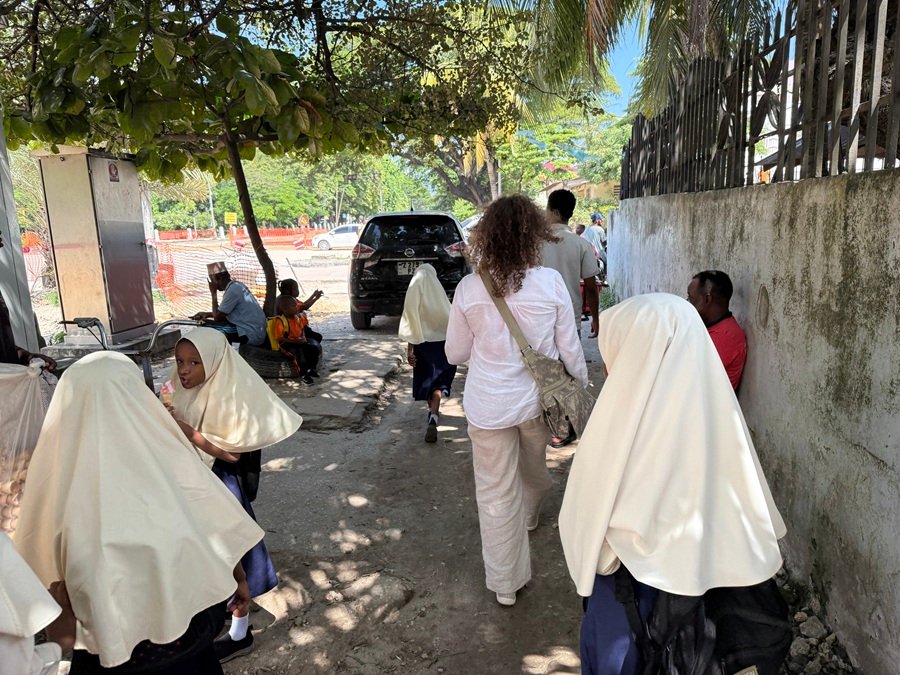
The museum marked the end of our tour and it made for a more solemn ride back to the hotel. We spent the rest of the day reflecting, reading, and listening to the cheers coming from the lounge where South Africa was playing in the World Cup.
Relaxation Day
When we travel, we tend to want to get out and see things. In our years of marriage, I cannot remember ever spending a day just lounging by the pool, but when in Zanzibar…. We took a quick walk to the beach to say we had at least dipped our toes in the Indian Ocean, and then it was back to umbrellas, sunscreen, books, and a long cool drink. Lots of sunscreen! Not much else to say.
Monkey-watching at Jozani Forest
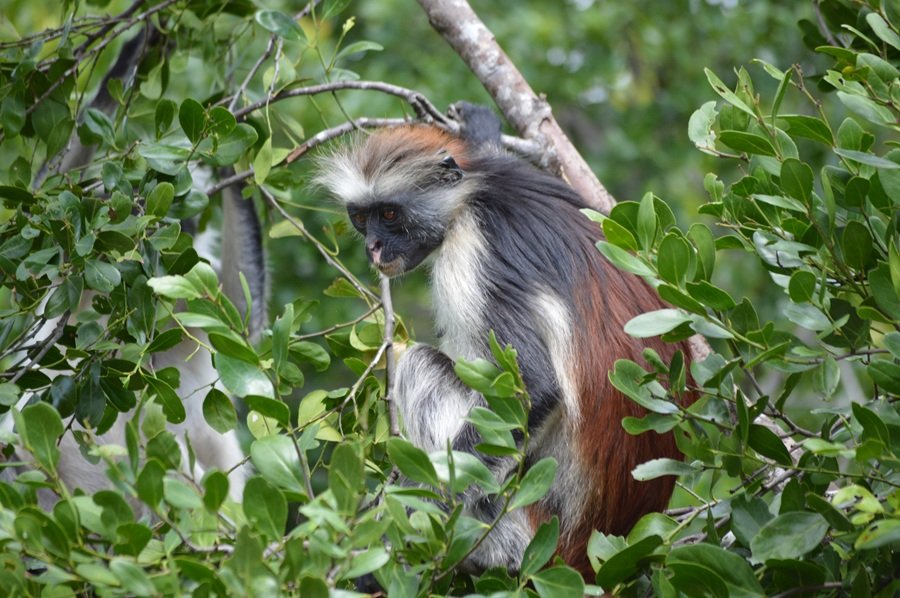
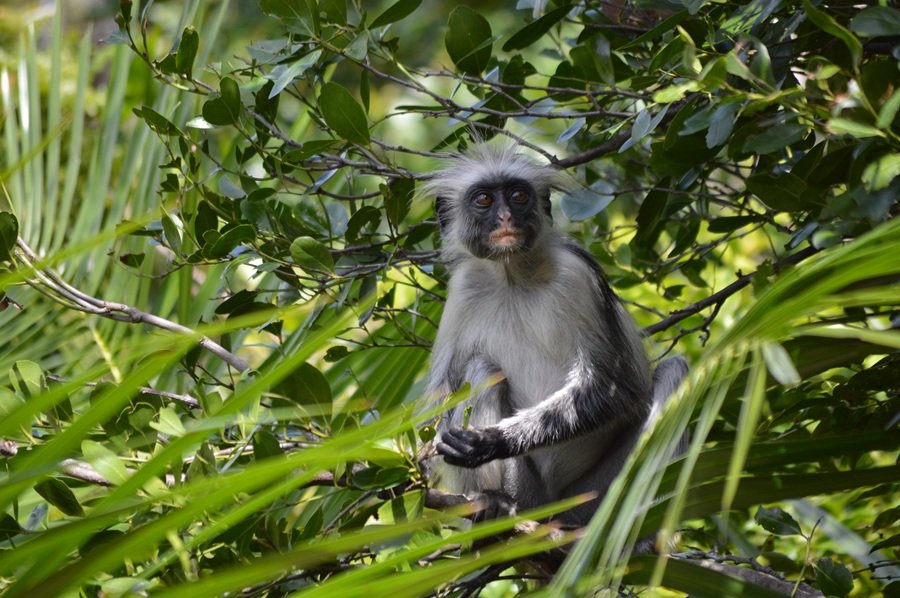
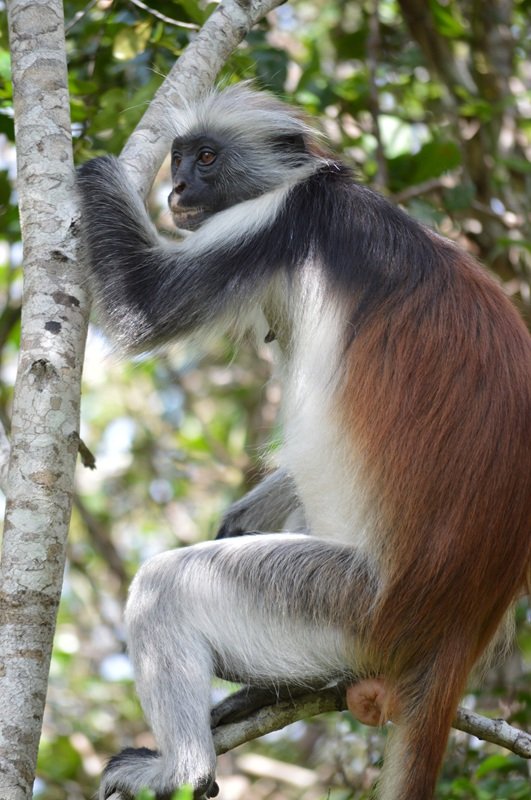
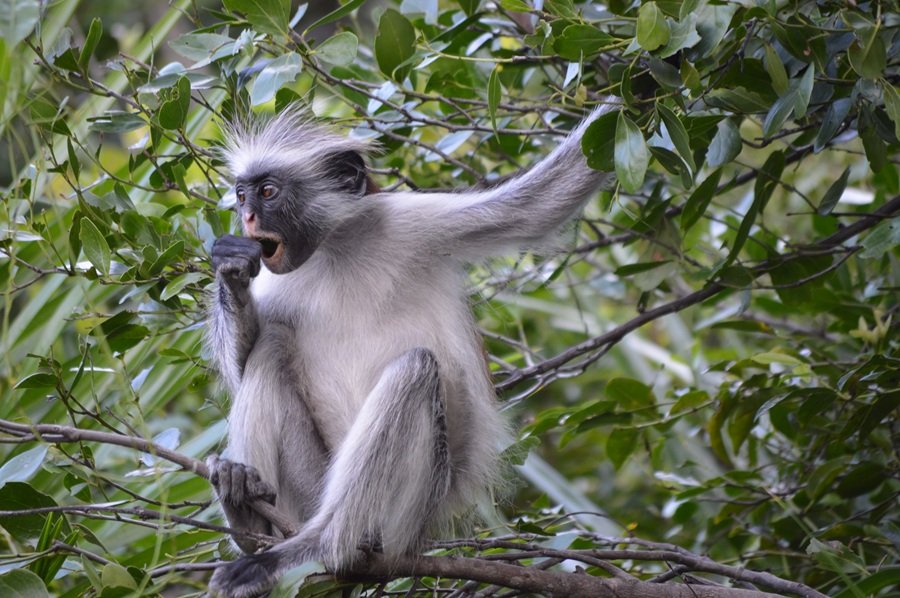
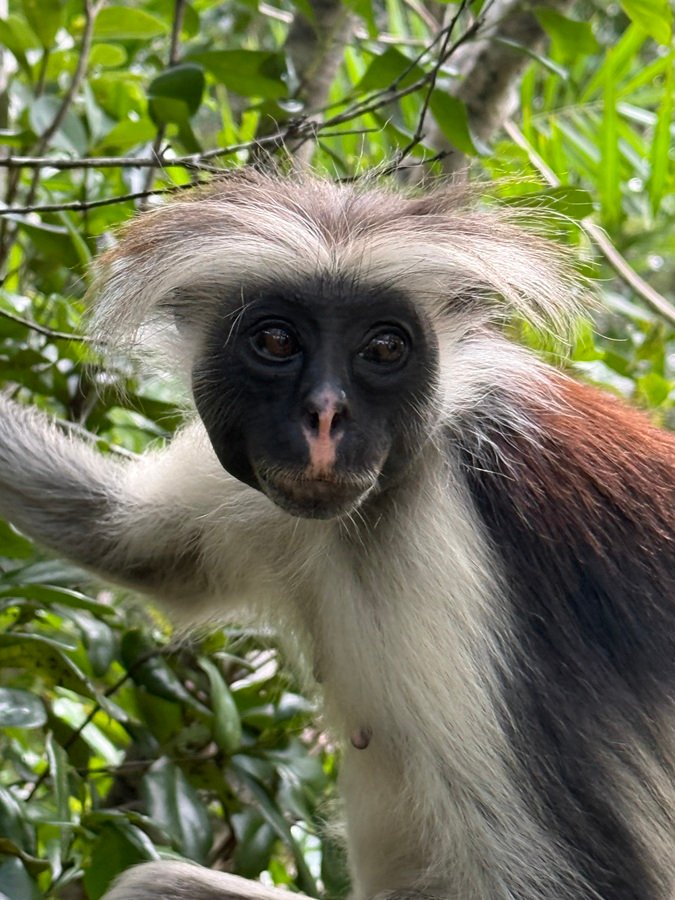
For our final full day, we had booked a trip to Jozani Forest to see Zanzibar’s resident colobus monkeys. This was my day to indulge in my love of all things primate-related, and it was wonderful!
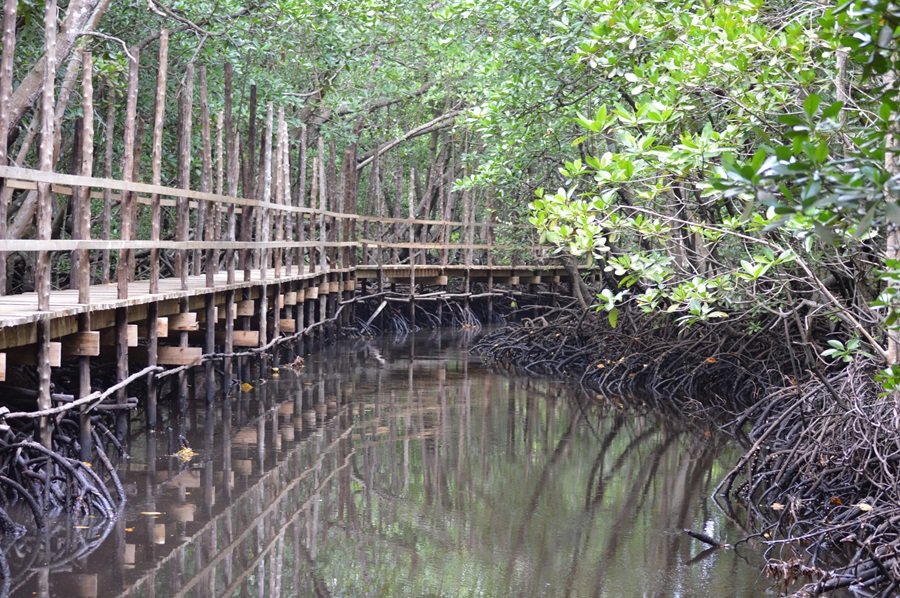
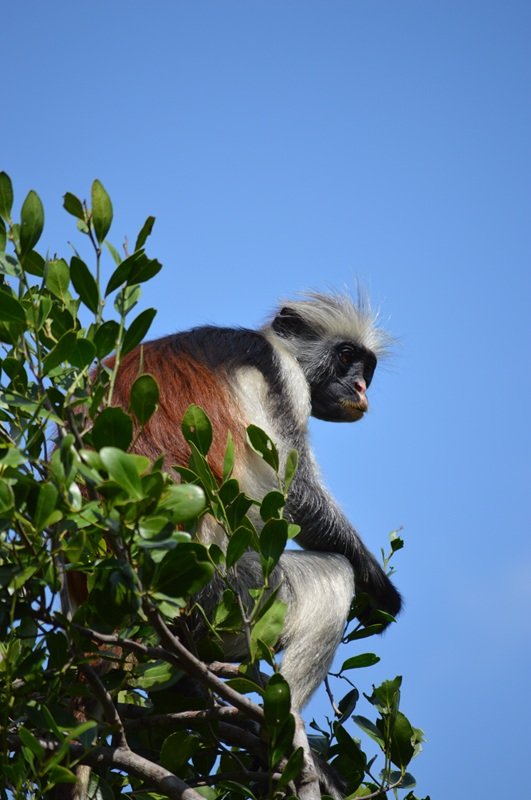
There are two species of monkey living in Jozani Forest. The blue colobus can be found throughout Central and Eastern Africa. But their cousins, the Zanzibar red colobus, are native to Zanzibar so if you want to see them, you have to visit Jozani. They are one of the most endangered monkey species in Africa due to deforestation and habitat loss, and so Jozani plays an important role. Our guide also explained how the villages at the edge of the preserve all work to protect their habitat. Needless to say, I spent a long time in the forests taking dozens of pictures. We also visited the mangrove forest at Jozani, where we learned about the vital role they play in the islands’ biodiversity. All in all, the day is best summed up by the pictures below (just a small sample of the multitude I took).
Thoughts on Zanzibar
Our trip to Zanzibar was something we added on since, if we were going to travel all the way to Tanzania, we didn’t know if we’d get the chance to visit again. If you are a sun-lover, and want to spend hours by the pool, or if you want to try scuba-diving, boating, fishing, and so on, this is a great destination for you. We spoke to some hotel guests who were there for a week or more, barely leaving the compound except when going diving. On the other hand, we loved exploring Stone Town and Jozani Forest, and the opportunity to learn about the area’s incredibly rich history.
We definitely want to return to Tanzania and spend more time in and around Serengeti, as well as venturing further south to see the chimpanzees and some other national parks. Would we visit Zanzibar again? On reflection, I think we would do something similar to this trip. I don’t think I would want to spend days by the pool, but I would probably plan another three or four days’ trip so we could revisit Jozani Forest and have more time exploring Stone Town. It was a great way to finish out our vacation and enjoy the pole-pole lifestyle.
Click here for more info about planning a trip to Tanzania.