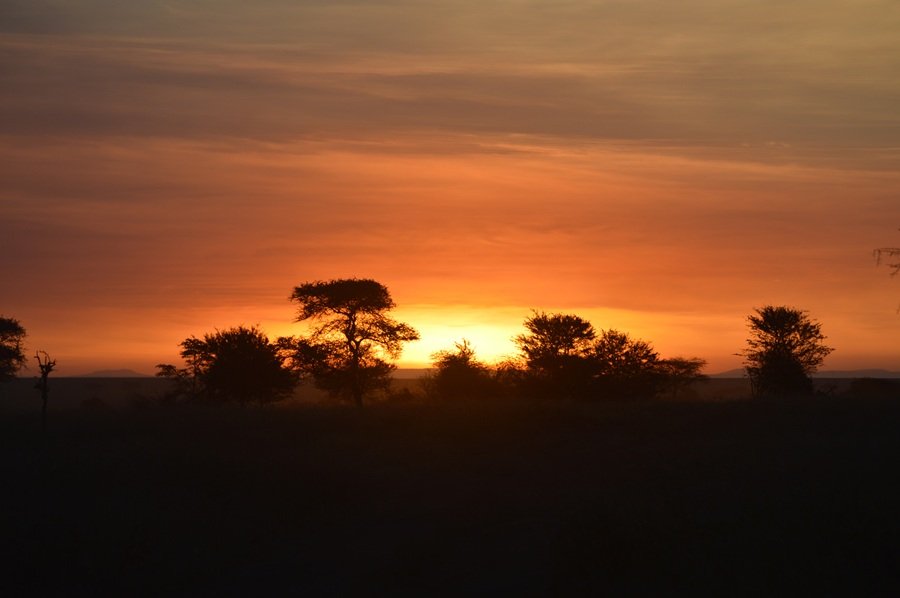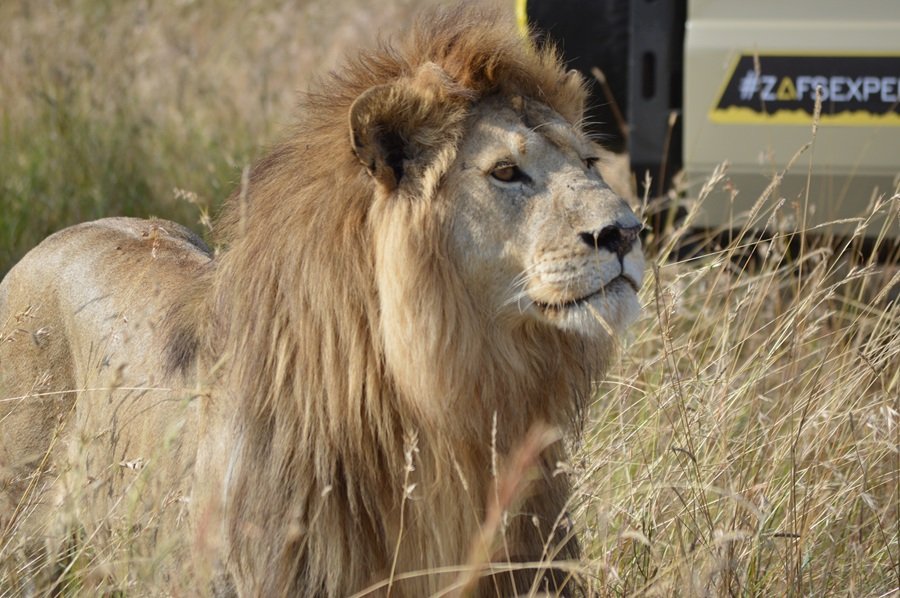
You’ve planned your Tanzanian adventure. Now it’s time to enjoy every minute! Read on to learn more about our stay on the mainland below.
Day 1: Relax in Arusha
Since our flight was scheduled to arrive at Kilimanjaro airport late in the evening, we allowed for a day to rest up before starting our safari. That turned out to be an even better idea given that our flights were delayed and we arrived shortly after midnight. We were whisked to the Arusha Villa for a couple of nights.
After a relaxing night’s sleep, interrupted only by the sound of the colobus monkeys outside in the trees, we woke up feeling refreshed. Arusha Villa is part of a coffee plantation well outside the hustle and bustle of the actual city of Arusha (Tanzania’s X largest). They grow a lot of their own produce on site and so breakfast consisted of locally grown passionfruit, papaya, and mango, accompanied by their very own coffee. We are not typically coffee drinkers but when in Rome… and this was very good, without what I always call the burnt bitterness that coffee in the US seems to have.
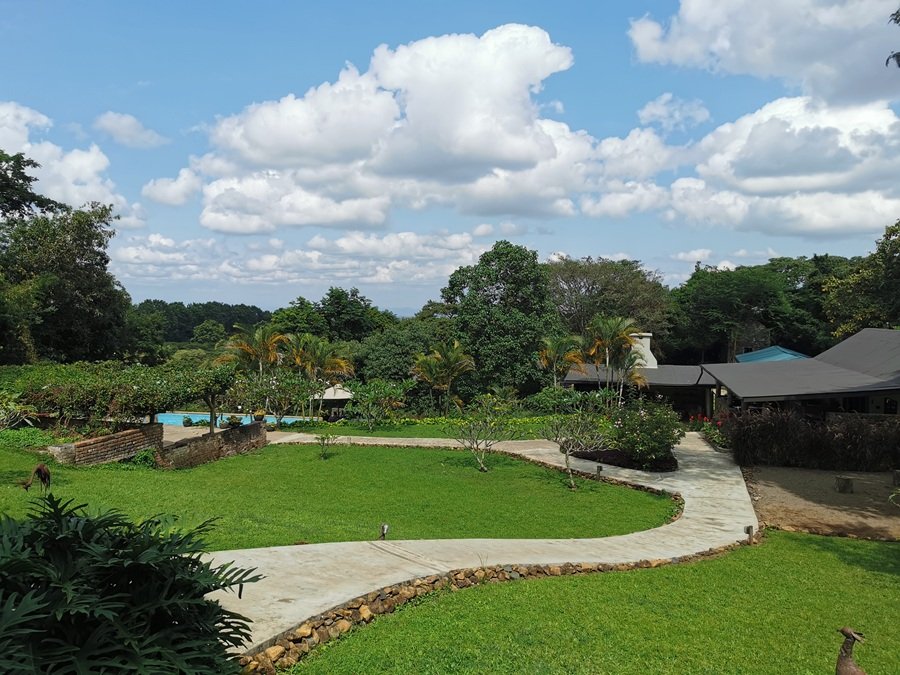
A representative from Tanzania Specialist stopped by to check that everything was ok and to go over our trip itinerary. Then we had the rest of the day to ourselves. A few rumbles of thunder and some rain showers gave way and the gardens seemed to come alive. Tanzania is home to more than 500 species of butterfly and, after the rains, butterflies of every imaginable color fluttered about.
Lunch was a squash soup, followed by salad and a vegetable chapati, again all locally grown. While the dozen or so other people staying at the villa relaxed by the pool for the afternoon, we decided to stretch our legs with a wander into the village. That created lots of entertainment for the local children and introduced us to one of Tanzania’s fascinating sights – how much can you fit on a scooter?
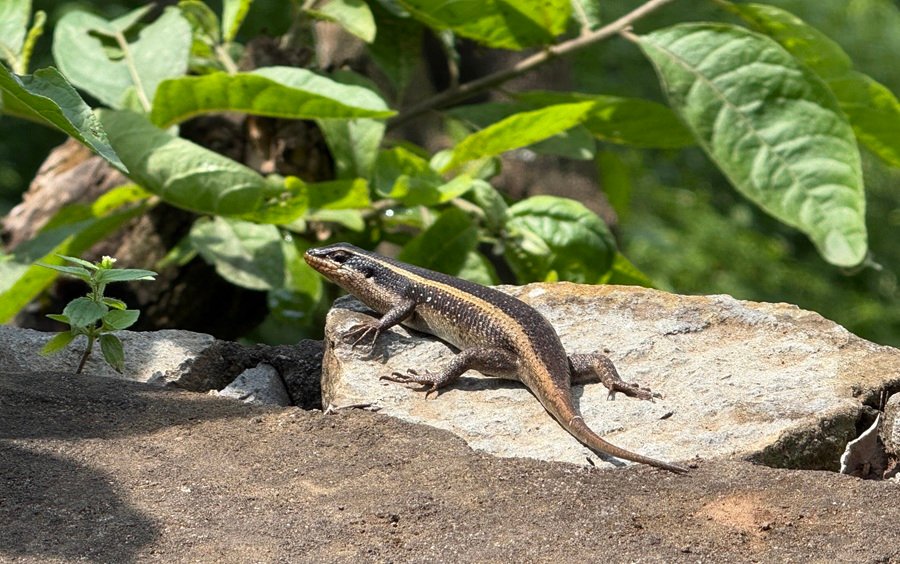
Scooters are an easy and popular way to travel around, but Tanzanians use them to carry impressive amounts of cargo. Carrying a passenger? Easy. But how about a driver and three passengers clinging to each other behind? How about two people and a goat sandwiched between them? How about enough bales of hay and straw that they towered over the driver and took up the width of the road? Just a few of the scooter sights we’d see during our trip. It almost became a competition to see who could spot the most outlandish cargo.
Back to the villa for a leisurely read before dinner and then an early night so we would be up and ready for tomorrow’s adventure.
Day 2: Tarangire National Park
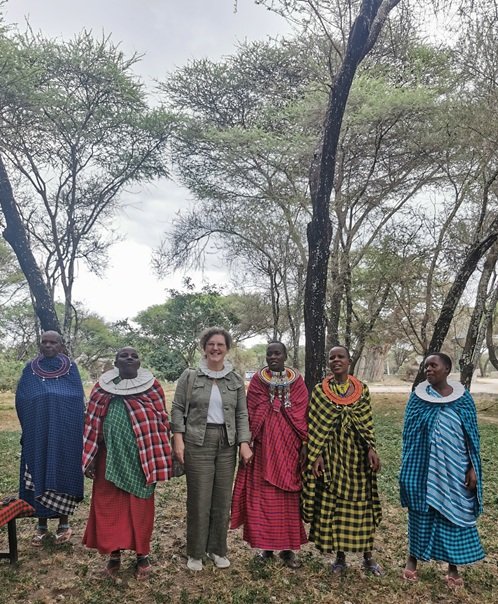
Everyone staying at Arusha Villa with us were getting ready to set out on a safari with Tanzania Specialist and so there was a definite air of excitement at breakfast the next morning. People ate and quickly returned to their rooms to make sure they had everything packed and were ready to go. By the time we’d finished eating, a steady stream of vehicles waited out front. One reason we chose to travel with Tanzania Specialist was that we had our own guide. Instead of being crammed into a vehicle with half a dozen other strangers, for the next few days, it would be me, my husband, our fabulous guide Lameck, and a Toyota Land Cruiser. The extra space and freedom to move about was definitely appreciated when the roads got bumpy (Hint: the roads are always bumpy!) and we could stop and see whatever caught our interest without having to worry about others.
Lameck introduced himself, we packed our stuff in the land cruiser, and off we went. The drive to Tarangire National Park took about three and a half hours, which gave us plenty of time to sit back, chat with Lameck, and watch the world go by. The streets of Arusha were dusty, noisy, crowded, and oh so vibrant. I’m glad I wasn’t driving because cars and bikes would wind in and out in what looked (to me) like total chaos, but everyone seemed to have it figured out.
Leaving the city and passing into more rural areas, we passed children tending large herds of goats and cows and Maasai women carrying large packages atop their heads.
Tarangire is known as the land of elephants. Lameck promised us that we would see hundreds. But when we reached the lunch spot, he was disappointed that we had perhaps seen only two or three far off on the horizon. We weren’t bothered at all, excited to be taking in every inch of the landscape. Still, he apologized that we hadn’t seen more. He needn’t have worried. Barely a mile out on the afternoon’s game drive, we came across a huge mass of wildlife – zebras, giraffes, impala, and yes, plenty of elephants.
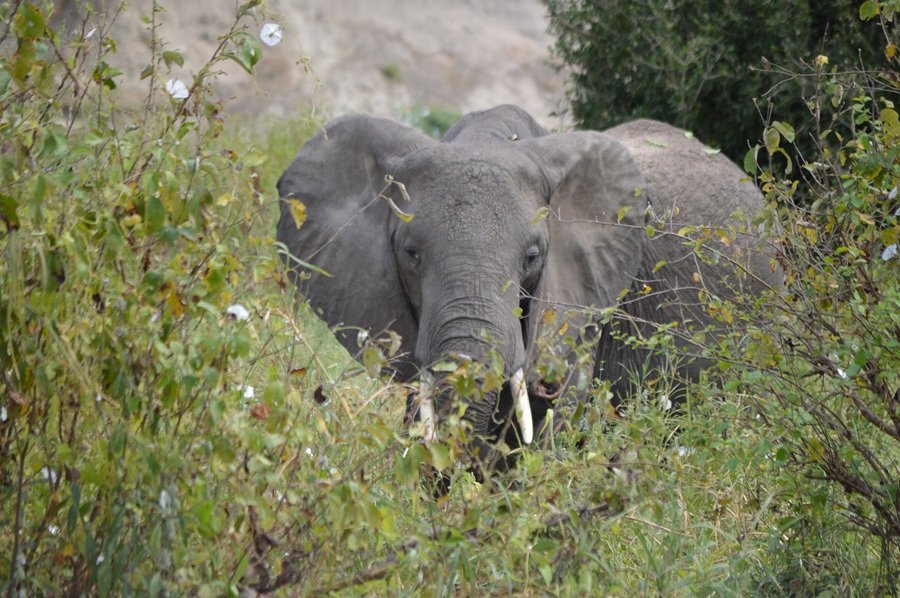
From Tarangire, we made our way to our hotel, past more elephants, Maasai villagers, and scooters. Our next stop was the Tanzanite Center where we could admire this magnificent blue gemstone that is found only in the foothills of Kilimanjaro. Honestly, it is far more beautiful than any diamond. Sadly, the tanzanite jewelry was well out of our price range and so we made do with a Christmas tree ornament.
A few more miles and we turned off the main road into a small village. We drove down a dirt road past metal shacks and market stalls. This was during the elimination rounds of the World Cup and a crowd of men gathered around a television outside a cafe to watch a match. Lameck explained that even though Tanzania was not playing, people were keen to cheer on the other African teams.
Moonbow Lodge sits on the edge of the Manyara Rift Valley Escarpment. Each cabin is completely surrounded by foliage and has giant glass windows allowing us to feel as it we are part of nature. We enjoyed another incredible meal for dinner and drifted off to sleep hearing singing in the distance.
Day 3: Serengeti National Park
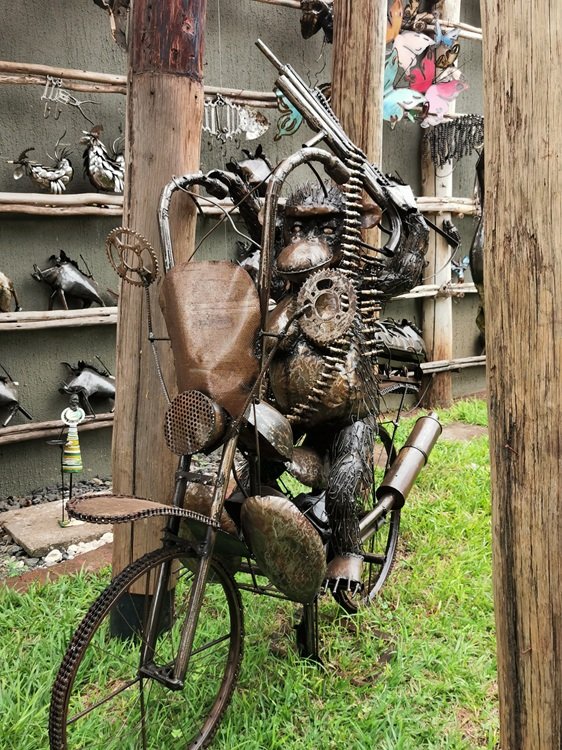
Time to finally head to one of my dream destinations. Serengeti National Park covers more than 15,000 square kilometers, almost 6,000 square miles, and is a UNESCO World Heritage Site. And what lives there? More than 500 types of bird, as well as wildcats, elephants, hippos, rhinos, hyena, and… I could go on for hours. But before we reached the park, we made a few pitstops at a Maasai shop and a rather curious art gallery where we saw, among other things, a life-size metal sculpture of a chimpanzee toting a machine gun on a bicycle!
To reach Serengeti, we had to drive around the edge of Ngorongoro Crater. We would come back there later in our trip but for now heavy clouds and mist engulfed everything, making the drive seem almost otherworldly. Eventually, the rains cleared and we continued along miles of bumpy dusty roads. We were getting quite used to the famous African massage by this point.
The wildlife spotting began almost instantly in the national park. We packed up from lunch and within a few minutes from the entrance, we saw our first zebras. That was just the beginning. Since we’ve returned to the US, several people have asked if the animals were enclosed. If the park was fenced in. Of course not. The Serengeti and the surrounding area is their home. And even after years of nature documentaries, it was still breathtaking to see it in person. A landscape that extends for miles and miles, home to all manner of creatures. Over the course of the afternoon, we saw zebra, antelope, buffalo, wildebeest, hippos, warthogs (the Swahili name pumba is so much better), foxes, impala, lions…. We’d be driving along and suddenly a message would come over the radio from one of the other drivers, letting us know of an animal sighting and giving us a location. Lameck would quickly set off in that direction so we could see as much as possible. With each sighting, he would stop, allowing us to take pictures and just revel in the sheer magic of it all until we were ready to leave. To tell the truth, I don’t think I’d ever be fully ready to leave. Lameck’s knowledge of each species was impressive and he would pepper us with facts about their habits. And here’s where having a guide was so very valuable. The guides know all the best watering holes and hideouts within the park. It’s hard to even describe how incredible the day was.
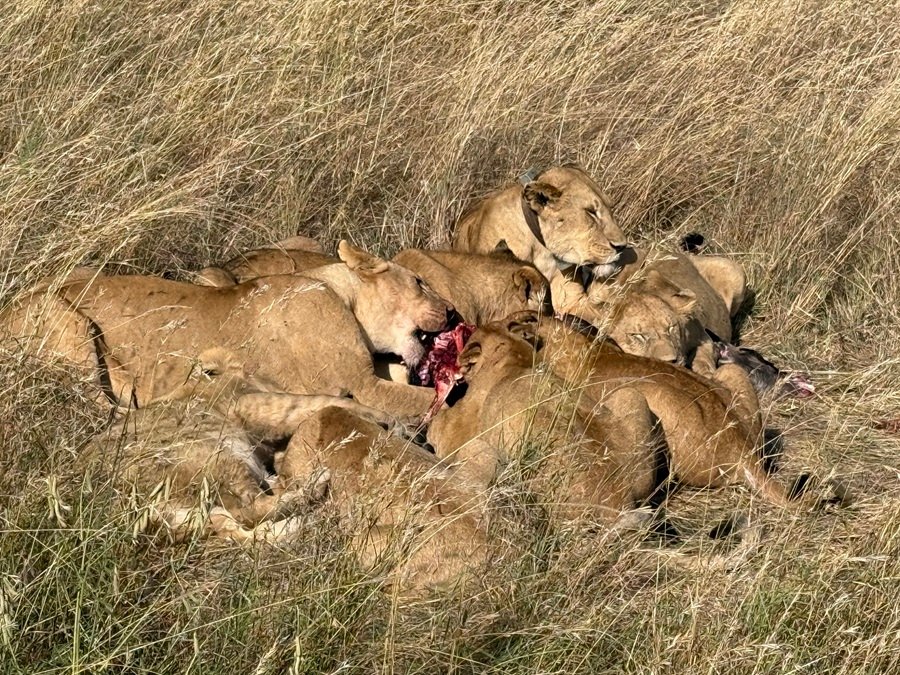
That night we stayed at one of the glamping lodges within the park. We had never been glamping before and had no idea what to expect, but we needn’t have worried. We stayed in our own glamping cabin, with a large storage area, showers, and a bed facing the giant windows that looked out over the sunset. In the evening we enjoyed dinner at the central lodge and sat on the veranda drinking and chatting with some of the other guests as we watched the sun go down to the strains of “The Lion Sleeps Tonight.” A guard walked us back to our cabin, just in case any animals had wandered into camp. A hyena lurked in the shadows. We’d hear him several times during the night.
Day 4: Serengeti National Park
You’ve heard of the Great Migration. You may have seen it on TV. Seeing it up close is a different experience entirely, and it’s how we spent our second day in Serengeti.
It is the largest migratory movement of animals in the world and it never really ends. Several million (yes, million!) zebra, wildebeest, and antelope are constantly on the move around the Serengeti in Tanzania and Kenya, moving to where the best grazing lands are. The year starts in the southern Serengeti where the wildebeest birth their calves. In spring, those grasslands start to dry up and so it is time to move further north, gathering in the western part of the park in late May and June, ready for the next major hurdle of their journey. In July, they gather in numbers that befuddle the mind and cross the crocodile-infested Grumeti River. From there, they cross the northern Serengeti and push into Kenya’s Maasai Mara Reserve to make the most of the grazing lands there, before making their return south in the autumn so that they can begin the cycle again.
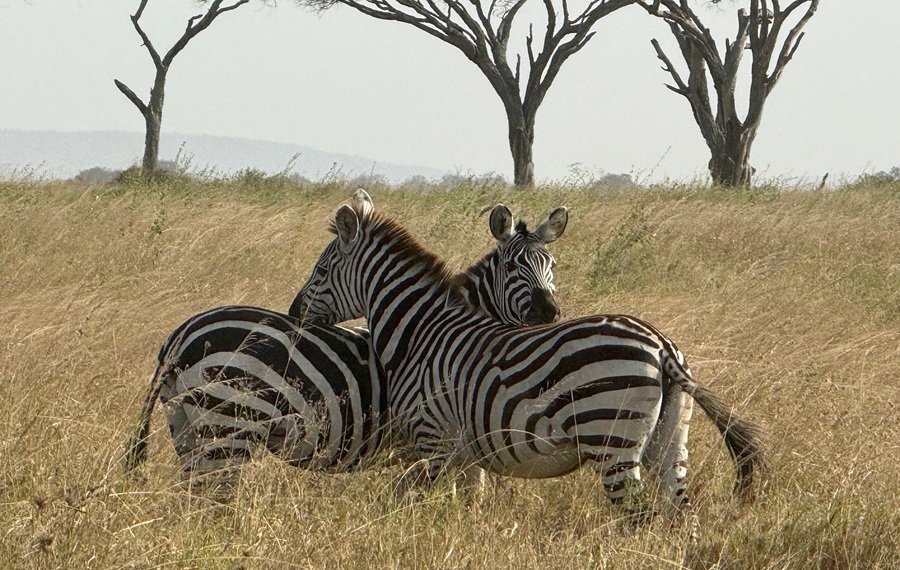
So it was this morning that we loaded up to head to the western part of the park. Even the guides, who spend their lives witnessing this, had an air of excitement and the radios crackled with chatter about whether anything had been spotted. And then, we slowed down to allow a few zebra across the road. A few more. And more. They came in their hundreds, galloping in one massive herd. Wildebeest and gazelles joined the train. And still they came, until they stretched for miles in front of us. Every time we thought they might have finished crossing, more appeared. Some leapt with incredible agility. Other older and slower ones moved more steadily. When we could finally move again, we made our way carefully through them, watching as they paused to rest, graze, and regroup. Further along, we encountered smaller groups, all moving toward the larger mass. And that is how the morning continued until we reached a remote airstrip to stop for lunch.
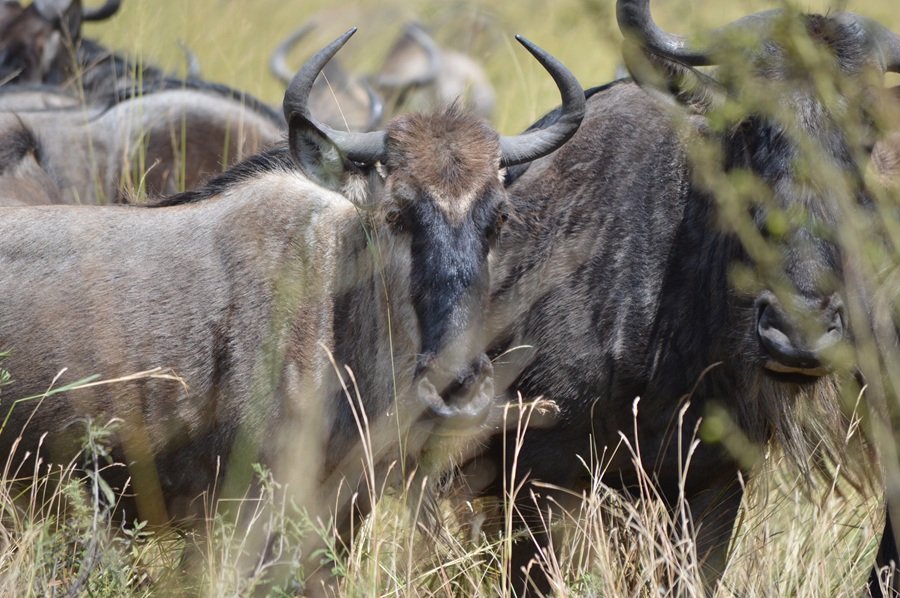
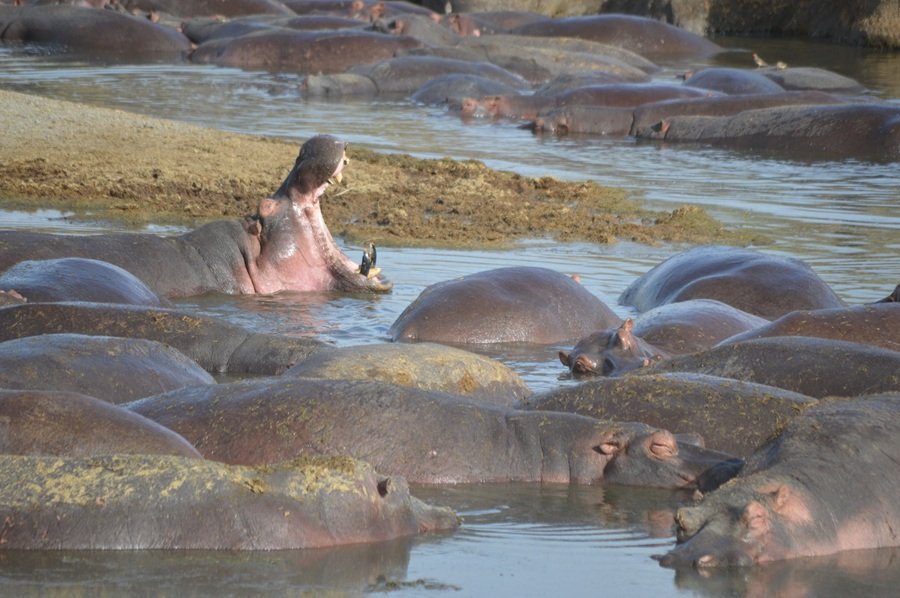
In the afternoon, we spotted more migrating groups and then made our way to the water where crocodiles lazed in the sun, now doubt biding their time for a tasty treat. Then, on to see the hippos. About sixty of them, dozing in their watering hole. Did you know they turn bright pink the longer they are in the water? As some started to stir, they would roll over, splashing and revealing neon pink bellies. I had seen hippos at Kruger but not in these numbers. Lazily, they would yawn, rearrange themselves to get comfortable, and then doze off again before it was time for their nighttime walk and feed. By the way, if you’re wondering, yes, the smell was quite something!
Back past more zebra, more impala, more elephants and giraffes, and then lions. The younger members of the large pride played in the long grasses, while the elders slept.
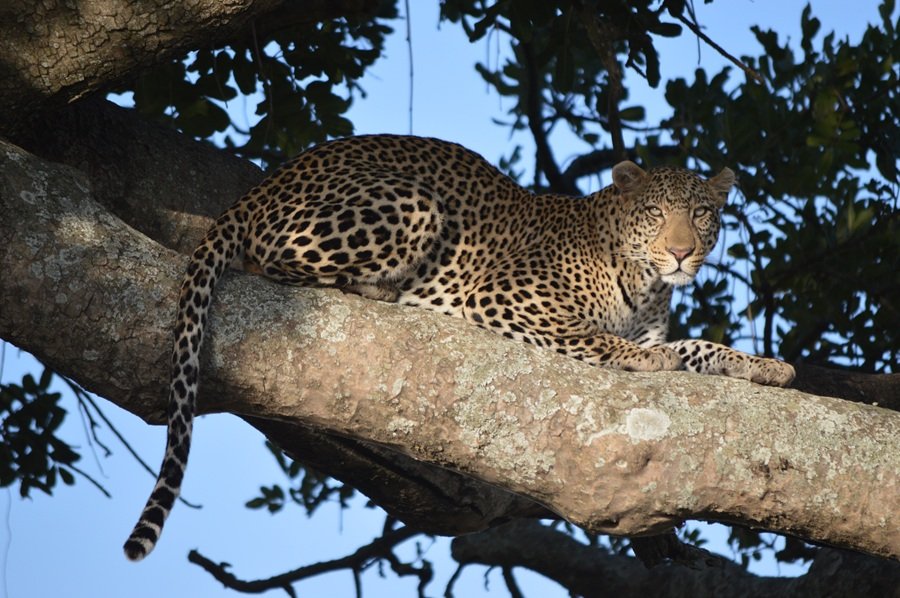
Late in the afternoon, just as we were making our way back to camp, Maleck pointed to something in a tree. On closer (but not too close!) inspection we saw the carcass of a young zebra. He explained it must have caught by a leopard. They hauled their catches up into a tree where it would be out of reach for the hyenas. That way, they could return and finish their meal later. Sadly there was no sign of the leopard, or any hyena. However, we would hear the hyenas crying out that night, along with the moan of a lion.
Day 5: Ngorongoro Crater
The next day was our 25th wedding anniversary, our reason for taking the trip to Tanzania in the first place. It was also the day we got up at 5.30am. In any other circumstances, I’d say it was a ridiculously early time to get up, but when you’re on safari, you don’t want to miss anything.
We were leaving Serengeti today and heading to Ngorongoro Crater. But the national park still had a few surprises in store for us. As we pulled away from camp in the direction of the rising sun, my husband joked aloud that perhaps we’d see that leopard coming back to reclaim his kill. And what do you know? There, as if by magic, was the tree with the leopard gnawing on the carcass while a hyena waited below hoping to grab anything he might drop. It was so completely unexpected, I think it will be the first thing we remember when anyone asks us about Serengeti. What were the odds? Since no other people were around, we watched it for some time undisturbed.
Moving further along, the park was still revealing its wonders. We passed a small rest area that we had stopped at one our first day there. Let’s just say we wouldn’t be stopping there to use the restrooms this time. A pride of lions had moved in and, in true cat fashion, they had trashed the place. Two cubs wrestled with a lengthy roll of toilet paper, another guarded his catch – a rather fine red bucket – from a safe distance. A large male sat atop the picnic table surveying the scene while others played in the early morning sun or drank from a broken pipe. Barely two feet from where we stood in the open-topped Land Cruiser, more than a dozen lions had claimed the area as their own. Pure magic.
I have to mention two more sights before we left Serengeti. We did not take a balloon ride, but the hot air balloons silhouetted against the deep orange sky were something to behold. And finally… some readers may know I developed a love of vultures during a trip to France, and I was rather disappointed that I had not seen any in Tanzania. That was soon fixed when we saw some magnificent white-headed vultures nesting the tree tops. Mission accomplished!
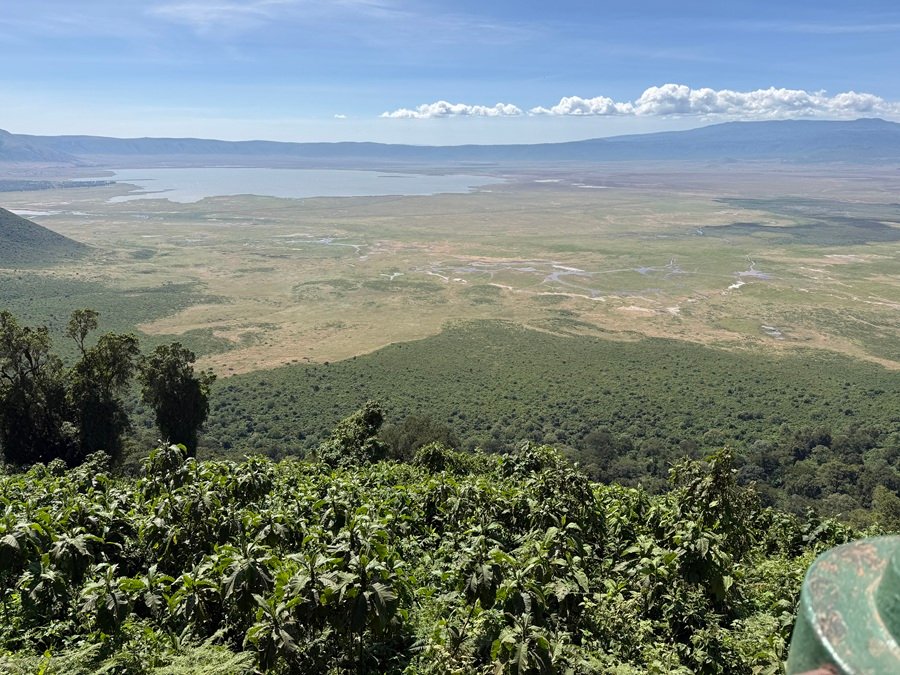
Ngorongoro is the world’s largest intact volcanic crater and a UNESCO World Heritage Site. It is also an important conservation area, filled with wildlife that has been stranded in the basin since it was created more than two million years ago. This means there is always wildlife to see, lots of it. We had passed a group of lions and were admiring the flamingos when a message came over our radio from one of the Tanzania Specialist drivers. Immediately, all of the TS vehicles started moving, and the other guides, realizing something was afoot, followed suit. The rhinos were on the move.
You might be wondering why I hadn’t mentioned seeing rhinos in Serengeti. There are some there but you won’t see them. They live in a remote part of the park, carefully guarded to prevent poaching. The ones at Ngorongoro are also closely guarded, but easier to see. Still someway off (the soldiers won’t let you get too close) a trio of rhino sauntered across the grassland, while a troop of baboons carrying their young, relaxed nearby.
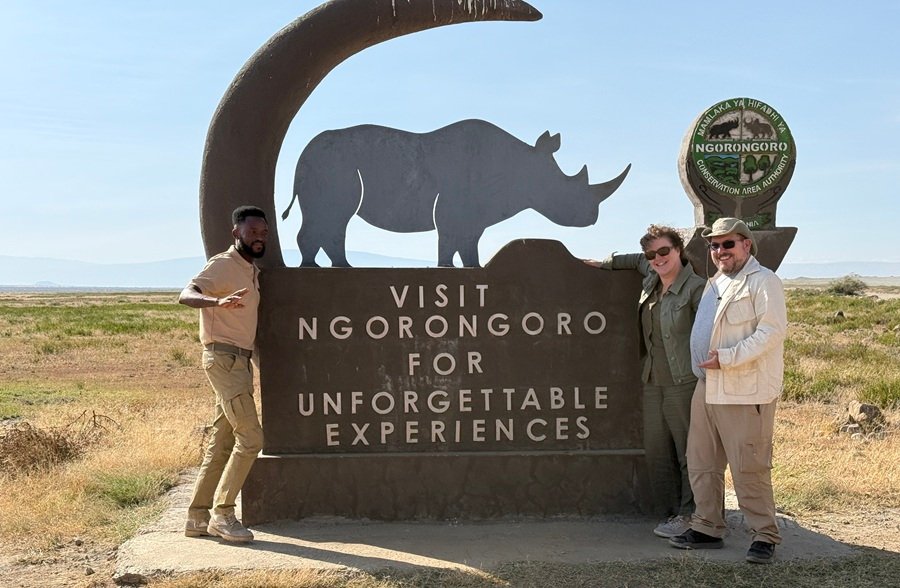
Because Ngorongoro is enclosed by the landscape, you will find animals everywhere you look. Out of one window you might see hippos, while out of another buffalo and zebra are grazing (no Great Migration for these creatures).
After leaving Ngorongoro and making our way back to Moonbow Lodge, it was a little strange to suddenly be amid the hustle and bustle of people and traffic in Karatu. The staff at Moonbow welcomed us back as if we were old friends and we enjoyed an anniversary dinner and drinks as the sun went down.
Time to leave mainland Tanzania and head to Zanzibar.